Sunday, 13 April 2014

Test Shoots for Assignment 5

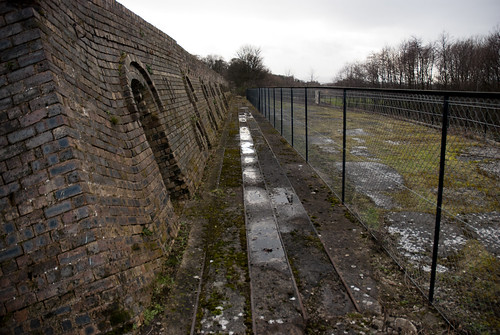
One of the subjects I am considering for assignment 5 is the lack of historical preservation of the industrial heritage of the area. There are a number of areas which were historically important which are now being left abandoned or build destroyed and built around.
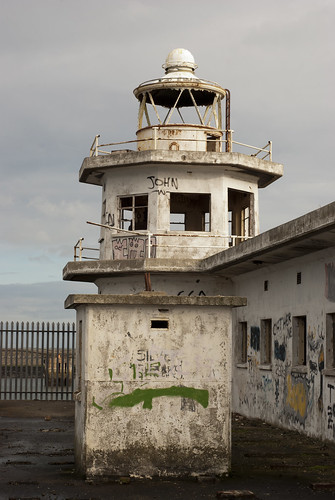
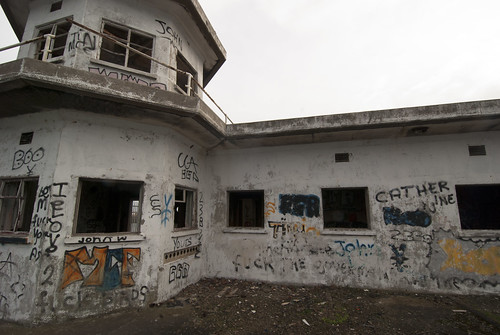
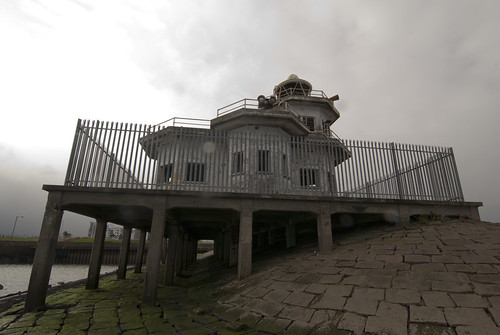
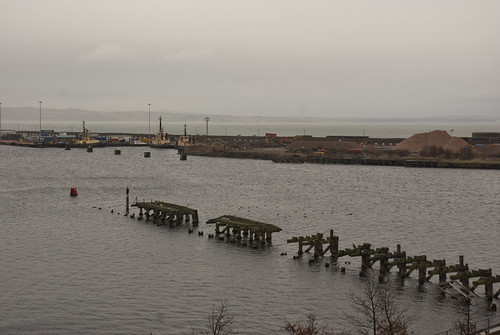
I first noticed this abandoned lighthouse while standing overlooking the royal yacht Britannia. In this distance at the end of what was originally as seawall stands this lighthouse. The seawall and harbour bay have been filled in and now new expensive housing is being built almost right up to the lighthouse.

Lighthouse

DSC_0010


DSC_0018

DSC_0025

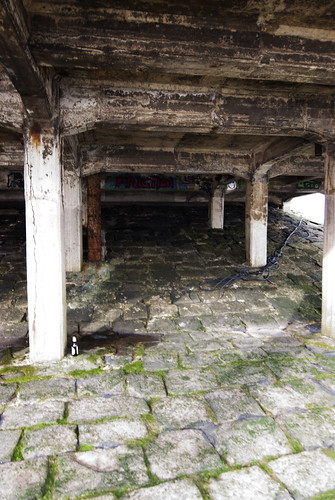
Beers Below

DSC_0035

Statue at end of Pier

DSC_0080


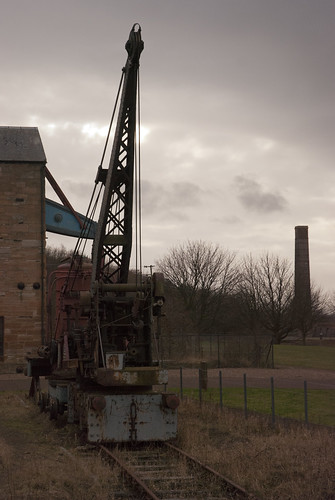
Mining Museum

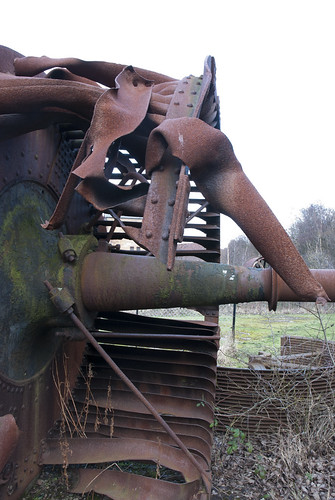
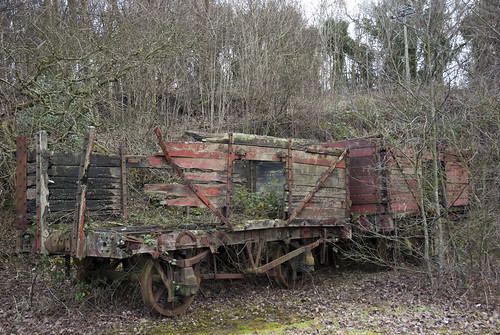
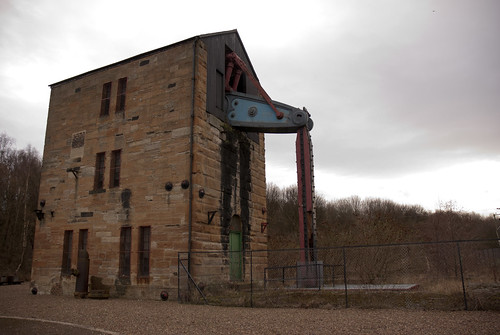
Further along the coast is what is left of a mining museum, a lot of the items on display are now beginning to rot and rust.  The trains, trucks and tracks that I remember as a child have almost all disappeared and the beam engine which used to stand proudly in the centre of the grounds now sits like a wounded dinosaur, a blot on the landscape ignored by locals and passers-by alike.

DSC_0089


DSC_0096

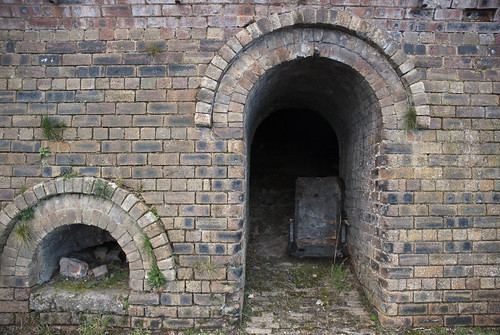
Brickworks

DSC_0110

DSC_0127

Beam Engine

DSC_0147


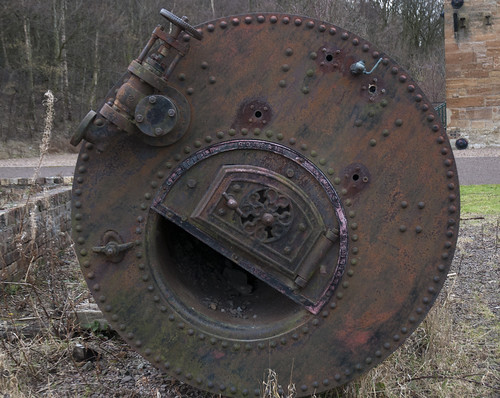
Happy Boiler?

DSC_0149


DSC_0157

DSC_0174


Monday, 24 March 2014

Response to Tutors Comments for Assignment 4


Thank you for your feedback. I have to say that I was very disappointed with your comments.

After deciding that the original set of images did not gel, I went back to my notepad and looked over the previous notes I had made on similar ideas for this Assignment.

On reviewing the set of notes and ideas for Haddington, I then journeyed through the town to each of the locations that I had previously noted, discarding some as although I felt they fitted the brief, they did not make a cohesive grouping. The fact that I was lucky enough to gather over 20 suitable images during that day did not mean that I wandered around with no preconceived plan, the notes that I had made pointed me directly to the locations where I wanted to be. Due to my mobility issues, the actual journey was planned with almost military precision. I have to make sure that when I go out on a shoot, I do not overdo things and cause myself pain. My route is planned and timed so that if I am late then someone knows to come looking for me. As I was on my own for this shoot, I had to limit the equipment to that which I could feasibly carry and in this case, a tripod was too heavy.

For Image 1 I deliberately chose f22 as I was using a 11-16mm lens. Previous experience with the lens had already prepared me for shooting at f22 as I knew the camera speed could go as low as 1/20th of a second before I would introduce hand held camera shake. I used f22 as I wanted to keep everything in sharp focus including the reflection in the river. Had I used f/8 I would have lost definition and colour in the reflection.
Had there been extra notes in the assignment asking for a cover image I would have adjusted the setup and shot the image with extra space within the frame, however nothing was detailed in the brief regarding a cover image so that was not considered. Before undertaking this assignment, I perused other students’ assignment submissions to ensure I was not copying an idea of misinterpreting the brief. I was not aware of cover images or conclusion images in all the works I saw.

Image 2.  I used my knowledge of the camera and the lens for this image. Because the lens has built in shake reduction I could choose the f stop that I wanted so that I could get all of the subjects in sharp focus. Allowing the lens to assist meant that I did not have to select exposure mode and could instead remain on aperture mode. This enabled me to capture what I wanted rather than allowing the exposure to control the speed.

Image 3 I wanted to capture the quietness of the moment and the fact that the elderly gentlemen was sitting on the bench, keeping himself to himself. He was so engrossed in his reading of the newspaper that he did not interact with passers-by; which included the family going to feed the birds, the cyclist and the dog.

Image 4. I appreciate that this image is relatively common, however I felt it captured the common nature of the activity, which is carried out regularly by many different folk in the area, showing ‘people in action’. The timing of the shot was dictated by the starting time of the game.

Image 5 shows that the river path is no longer used as the main transportation path into the town and has now become a byway used by dog walkers and people undertaking exercise. It has gone from being a part of the town’s business to being part of the town’s leisure.

Image 6. This picture was not specifically planned. Although I had intended to take an unobtrusive, street photography style image (people unawares), I had not known of the charity event taking place, nor that there would be live cartoon characters would be in the town square. As such, I took the image as it arose, spontaneously. I took a couple of images in quick succession and the image chosen, was, in my opinion, the best one. 

DSC_0072. I chose not to include this image in the final six because I felt that conveyed emptiness and a lack of use which is not what I feel is happening in the area. I felt that the peace and quietness of the elderly gentleman in image 3 showed relaxed usage rather than abandonment.


Saturday, 8 March 2014

Assignment 4 - A Sense of Place

What: The main brief of this assignment was to draw together ideas and experiences covered in the course so far and produce six images of a location in the style of a thought provoking publication.
Where: The Town of Haddington.
When: Midmorning
How: I undertook research of several locations. After photographing and collating one set of images I decided that they did not gel so I changed location and shot the town of Haddington.

I decided that I wanted to capture images that provoked an emotional response in me. I moved from place to place and waited until I saw something that I felt that I wanted to capture within the context of the assignment.

What I wanted to achieve was to capture the peacefulness of Haddington even though it is an expanding and busy market town. I wanted to show that a lot of the activity takes place in one of two locations - either around the main street at the town’s Corn Exchange or along the river.

The river was one of the first sources of industry in the town. At one time Haddington had a large wood industry and a large mill and waterwheel to grind the grain that was then traded in the Corn Exchange. The town itself is carved into two by the river and is crossed at various points by small bridges.

I think I succeeded well in capturing the town, showing that even though it has lost the mills and the heavier industry, the spirit of the town still survives and people now use the river for entertainment and pleasure.

Just beside the bridge the river runs past The Waterside Bistro. This building was originally a coach house, inn and shops before being renovated and is now a popular bar and restaurant.

DSC_0211
Nikon D80, Aperture Mode Manual, focal length 25mm (35mm equivalent 37mm), aperture f22, speed 1/45 second, ISO 400, Daylight white balance, Matrix metering, Hand Held Camera, 18-70mm lens,


The bright white of the building reflects in all manner of sunlight and produces a lovely reflection in the river nearly all year round. It always makes me happy when I pass to see the reflection in the calm path of the river.

The river provides a relaxing spot for people to pass time either by feeding the swans and ducks or by sitting peacefully by the water’s edge reading a newspaper.

DSC_0037
Nikon D80, Aperture Mode Manual, focal length 55mm (35mm equivalent 82mm), aperture f4.5, speed 1/2000 second, ISO 400, Daylight white balance, Matrix metering, Hand Held, 18-70mm lens,


I really wanted to capture the excitement of the children as they fed the birds, each child trying to outdo the others and feeding their favourite bid.

As I moved along the river path I encountered a gentlemen sat for a while reading a newspaper and it reminded me of my dad who used to do the same when on holiday in his caravan.

DSC_0054
Nikon D80, Aperture Mode Manual, focal length 300mm (35mm equivalent 450mm), aperture f5.6, speed 1/1000 second, ISO 1000, Daylight white balance, Matrix metering, Hand Held Camera lent against tree trunk, 70-300mm lens,


I chose to use the telephoto as I did not want to disturb him as he looked like he just wanted to sit quietly and pass time on his own. At first I thought the hat on the end of the bench was his but realised that it had been left there by someone else, probably found in the path and left there just in case someone came looking for it.

During the historical period known as the 'Rough Wooing' there happened a siege of Haddington and soldiers from the French village of Aubigny came to support the Scottish troops. Due to this link the two locations were twinned in 1965. Since the twinning, Haddington has had a resurgence and interest in sport and the Aubigny Sports centre and grounds, which were built as a result of the twinning are now used regularly by local schools and the public.

DSC_0074
Nikon D80, Aperture Mode Manual, focal length 70mm (35mm equivalent 105mm), aperture f5.6, speed 1/1500 second, ISO 1000, Daylight white balance, Matrix metering, Hand Held Camera, 18-70mm lens,


The sports centre sits beside the river and there are always dog walkers, runners and cyclists using the old tow path which runs parallel to the watercourse. Here a cyclist takes their dog out for a run along the river path which runs through the town out to the east and west of the town. The dog looked like it was having the time of its life as it ran long.


DSC_0071
Nikon D80, Aperture Mode Manual, focal length 60mm (35mm equivalent 90mm), aperture f5.6, speed 1/1500 second, ISO 1000, Shade white balance, Matrix metering, Camera sitting on the table, 18-70mm lens,


I cropped this image down as the dog and the cyclist were too far in the background and were too small; the balance of the image was on the path and the trees rather than on the intended subjects.

Turning back to the town, there was a celebration on for the third “birthday” of a local children’s organisation, and visitors to the corn centre were met with Mickey and Minnie mouse. Many of the children were surprised and excited to see cartoon characters here in the town.

DSC_0095
Nikon D80, Aperture Mode Manual, focal length 56mm (35mm equivalent 84mm), aperture f8, speed 1/30 second, ISO 100, Shade white balance, Matrix metering, Hand Held Camera, 18-70mm lens,


I liked the fact that the small child showed no fear initially and was pulling her parent toward Minnie before being distracted by the fountain. One of the other children pulled her mobile phone and photographed Minnie as they approached and then photographed the smaller girls, their parent and Minnie with the backs against the fountain.

I found it quite difficult to reduce my final selection to six images as I found I was having difficulty giving the full sense of place of the town. In the end I had to choose to remove a couple of images that while I found them ideal artistically they did not fit into the brief.

There was a missed opportunity to capture an image of Haddington at its busiest during the school drop off and pickup periods as this is when most people are out and about, as now being a commuter town the town centre itself can be very quiet during the day even at weekends.

I have added the other six images at the end of this assignment.

If I had been taking images for no end result I may have spent more time on the smaller botanical area in town which is full of plants and insects and not so many people. I would also have spent more time within the town limits capturing the passing people. I would have also spent more time photographing in internals and externals of the buildings. The final collection of images would probably not be quite so focused as they are.

DSC_0013
Nikon D80, Aperture Mode Manual, focal length 11mm (35mm equivalent 16mm), aperture f5.6, speed 1/1500 second, ISO 400, Daylight white balance, Matrix metering, Hand Held Camera, 11-16mm lens,


DSC_0072
Nikon D80, Aperture Mode Manual, focal length 18mm (35mm equivalent 27mm), aperture f5.6, speed 1/1500 second, ISO 1000, Shade white balance, Matrix metering, Hand Held Camera, 18-70mm lens,


I liked the sense of silence and quietness this image gives, but it also gives a sense of abandonment and emptiness that I found jarring.

DSC_0081
Nikon D80, Aperture Mode Manual, focal length 18mm (35mm equivalent 27mm), aperture f5.6, speed 1/4000 second, ISO 1000, Daylight white balance, Matrix metering, Hand Held Camera, 18-70mm lens,


DSC_0092
Nikon D80, Aperture Mode Manual, focal length 44mm (35mm equivalent 66mm), aperture f4.5, speed 1/180 second, ISO 1000, Shade white balance, Matrix metering, Hand Held Camera, 18-70mm lens,


DSC_0194

Nikon D80, Aperture Mode Manual, focal length 11mm (35mm equivalent 16mm), aperture f11, speed 1/180 second, ISO 400, Shade white balance, Matrix metering, Hand Held Camera, 11-16mm lens,


I really liked the colour of this image as the reflections from the building opposite really brighten up an overcast location. However the lack of people within the image means that the image is not quite suitable.

DSC_0205

Nikon D80, Aperture Mode Manual, focal length 56mm (35mm equivalent 84mm), aperture f5.6, speed 1/750 second, ISO 400, Daylight white balance, Matrix metering, Hand Held Camera, 18-70mm lens,


I liked this image as it showed the bridge in use, but I felt that the final six all met the brief better.

Tuesday, 4 March 2014

Exercise 23 - Selective Processing and Prominence


What: The main brief of this exercise was to take an image from a previous exercise and using processing software adjust the image to make two versions of the image.
Where: Image used was from the Chinese Lantern Exhibition
When: Late evening.
How: I chose the image as I felt that I could adapt it well using processing software to create two versions of the image. One giving promenance to the figures in the settings and the other making the settings stand out.


I really wanted to keep the image as unprocessed as possible, I did not want to go mad with adjusting brightness, contrast, selective colour, colour intensity.

As the images I used were Jpeg only as these are the only type of images produced with the camera I did not want to process them too much as I knew that it could spoil the image quite quickly.


SUNP005-2
Bonzart Ampel Tilt Shift Camera, Aperture Mode Auto, focal length 9mm (35mm equivalent 9mm), aperture f2.8, speed 1/30 second, ISO 100, Auto white balance, Multi Mode metering, Tripod mounted camera, 9mm lens,


By adjusting the colour intensity and contrast slightly I have given the image a higher range of colour. I did not want to make the image too bright as I did not want to over expose the lanterns and blow out the colour making them bright blurs. In this case I balanced the colours of the lanterns against the backgrounds and tried to bring out the colour of the jackets of the individuals giving them prominence against the background.

SUNP005-4
Bonzart Ampel Tilt Shift Camera, Aperture Mode Auto, focal length 9mm (35mm equivalent 9mm), aperture f2.8, speed 1/30 second, ISO 100, Auto white balance, Multi Mode metering, Tripod mounted camera, 9mm lens,


By adding a slight gradiated filter to the background I have brought down the contrast and brightness of the top of the buildings in the background. This has made the background much darker and suddenly it takes on a greater prominence in the image as it looms over the courtyard and the people below.


I was quite surprised by this exercise as I did not think it was quite as easy to adjust the prominence of the foreground and background in such a way. It made me view the final image quite differently as the background was just that a background to the first image.

Exercise 21 - Making Figures Anonymous

What: The main brief of this exercise was to use certain techniques to photograph a person or persons making them anonymous and less prominent than the area that they are in.
Where: Various Locations
When: Differing times.
How: While out photographing other exercises and other practices I kept an eye out for situations where I could photograph people making them anonymous against the background of the location that they were in.
I chose these photographs for the exercise as I feel that they work very well in making the people within the images completely anonymous and indistinguishable against the foreground of the image. I liked how doing this exercise forced the people into the background and made the balance of the image weigh towards the surrounds rather than the people.
DSC_0032
Nikon D80, Aperture Mode Manual, focal length 25mm (35mm equivalent 37mm), aperture f9.5, speed 1/45 second, ISO 3200, Shade white balance, Spot metering, Beanbag mounted camera, 18-70mm lens,


I really like this staircase, the way that the lines are out of balance with the rest of the building gives me a small happy feeling. I just like the out of kilter perspective of the image.
Here the person is walking up the stairs their back is the camera and they are also small against a large space. The fact that you cannot see the persons face means that you have to apply your own experience of the location to them. In this case I believe the person was enjoying the location.

DSC_0034
Nikon D80, Aperture Mode Manual, focal length 70mm (35mm equivalent 105mm), aperture f9.5, speed 1/90 second, ISO 3200, Auto white balance, Spot metering, Hand Held camera, 18-70mm lens,


I noticed a number of people walking backwards and forwards over a high gantry way between two parts of the building. Part of the structure had vertical slats on it and as people walked past it gave them a zoetrope style of movement. I waited until one of the people started to walk back and I captured them as they passed between the slats, partially obscuring them from view. I like fact that they are shadow like and by pushing into the partial view that they are phased out of the image and that the attention is given to the location rather than the individual.

DSC_0035
Nikon D80, Aperture Mode Manual, focal length 52mm (35mm equivalent 78mm), aperture f27, speed 15 seconds, ISO 100, Auto white balance, Spot metering, Bean bag mounted camera, 18-70mm lens,


I was watching the visitors as they milled around the car at the entrance of the building. The car is one of the formula 1card driven by a childhood hero who I discovered was also very dyslexic. I wanted to take a long exposure showing motion blur as I wanted to capture the different lengths of time that people stopped at the car. Motion blur also makes them anonymous pushing the balance over to what they are looking at rather than the people themselves.


DSC_0062- A failed experiment
Nikon D80, Aperture Mode Manual, focal length 52mm (27mm equivalent 40mm), aperture f19, speed 2 seconds, ISO 3200, Flash white balance, Spot metering, Hand Held camera, 18-70mm lens, Strobe flash


Here I attempted to combine motion blur with multiple exposure using a fast strobe flash. Unfortunately all that happened was that the fast strobe blurred the image more than I expected, perhaps if the camera had been better supported and the location darker it may have made a difference.

DSC_0115
Nikon D80, Aperture Mode Manual, focal length 50mm (35mm equivalent 78mm), aperture f1.8, speed 1/500 second, ISO 800, Auto white balance, Spot metering, Hand Held camera, 50mm lens,


While photographing the Chinese lanterns exhibition I noticed that I could silhouette people against the lanterns if correctly composed. I tried a number of shots before this obtaining this image. Here the figure is silhouetted against the lanterns and the reflections of the lanterns and has almost disappeared against the light. The person body shape almost mirrors the stance of the figures that she is observing.

SUNP005
Bonzart Ampel Tilt Shift Camera, Aperture Mode Auto, focal length 9mm (35mm equivalent 9mm), aperture f2.8, speed 1/30 second, ISO 100, Auto white balance, Multi Mode metering, Tripod mounted camera, 9mm lens,


I really wanted to try using a tilt shift lens to see if I could make figures anonymous, here the people are a distance away and although there is a large number of them and they fill quite a large space, by using the tilt shift lens the figures have been made to look small and model like anonymising them by our own concept of perspective which is fooled by the tilt shift lens.

This has been a good exercise as it has allowed me to work with ideas that I have had for a while as well as teaching me the concept of giving anonymity to figures within images through a variety of techniques.

Monday, 17 February 2014

Response to tutors notes on Assignment 3

My tutor has given me fair and a frank assessment of my work on the assignment and the following notes are in response to the critique.

 I had considering cropping the image looking down to the floor, but I felt that cropping the image meant that it lost some of the building showing the join between the two buildings .However the crop is effective in showing the floor and is tighter on the interaction of the people and the light coming in through the door.

 I think I did miss part of the exercise, as I did not always give a full and frank analysis of why the locations had given me some form of emotional response. I think part of that is down to my personality and part of it is down to my dyslexia which makes a vast disconnect from my emotions at times. This means that at times I am fully concentrating on capturing the image and I am not considering the emotional response that I feel at the time of capturing the image. I find it easier to reflect back to my emotional state when reviewing the images.
I have started voice recording notes during the shooting process to assist in the recording of my emotions rather than relying on recall.

 I have encountered Donovan Wylie before during a 2 day course at Edinburgh University on the Magnum photographic Collective. I quite like his work on Northern Ireland especially the urban photography where he highlights the Army monitoring posts overlooking the normal street scene. I was lucky to recently encounter the work of Sylvain Margaine whose work is similar to the recent webpages from abandoned Scotland.

 I would have used a tripod in the turbine hall, but even using a tripod would have resulted in shaky image as the whole building shakes and vibrates due to the amount noise and vibration from the turbines themselves. It is a bit like being inside a jet engine during a hurricane and an earthquake.

Sunday, 16 February 2014

Exercise 20 - Busy Traffic

 What: The main brief of this exercise was to photograph from a viewpoint to show a busy location
Where: Elephant Tearoom, Indoors and Old College Warrior Exhibition, Outdors
When: Mid afternoon and late evening.
How: I chose two locations as I wanted to get the experience of trying to assess the different flows of people within their surroundings.

Elephant TeaRoom

I chose Elephant tearoom as it is a constantly busy location; the tearoom itself was one of the locations that the author of the Harry Potter books sat and wrote and now the tearoom has become a Mecca for visitors and Harry Potter enthusiasts. It is almost always busy and getting a table can sometime take a while.
It is now a crowded location as they have chosen to add extra tables to allow for the increase in the number of customers and being a tourist location is a noisy jammed location.

I chose to reduce the image to a monochrome as it fitted with the room itself which is trying to maintain an air of “old school” Edinburgh without trying to become a solely tourist location.

DSC_0007-Busy B and W 2
Nikon D80, Aperture Mode Manual, focal length 18mm (35mm equivalent 27mm), aperture f9.5, speed 1/60 second, ISO 3200, Shade white balance, Spot metering, Camera sitting on the table, 18-70mm lens,


I tried to capture the noise of the tearoom as people from all over the world discuss the location and examine maps and books to decide where they will go next after eating.

Warrior Lantern Exhibition

I had read online that some of the terracotta warrior lanterns would be transported to Edinburgh and displayed in Edinburgh Universities Old College Quad for this years Chinese New Year. I was excited to see these as these lanterns had originally been designed and exhibited at the Beijing Olympics.

On arrival I was astounded by the number of visitors; I had expected a few dozen people to turn up since it was raining instead there were several hundred people there all who had turned up to see, touch and be photographed with the lanterns.

I quickly noticed that people either stood at the entrance and photographed the grouped horse and family, or they walked between the regimented figures first down the rows and then back across the rows. Children ran from figure to figure at random while some photographers stood to the sides and only photographed the outer figures. There was quite a Brownian motion as groups tried not to appear in one another’s photos.

I watched for a while from an upper location as the lights first started to dim and the first sets of visitors walked around the quad

SUNP0005
Bozart Ampel, Aperture Mode Fixed, Exposure Mode Auto focal length 9.3mm (35mm equivalent 9.3mm), aperture f2.8, speed 1/30 second, ISO 100, Vibrant white balance, Matrix metering, Tripod Mounted camera, 9.3mm fixed lens,


I really wanted to capture the size of the exhibition and show the vibrant colours of the lantern warriors but also experiment with showing the visitors as an accent to the final image. I chose to use a Bozart Ampel camera which has a fixed 9.3mm tilt shift lens. This allowed me to capture the colours and also accent the people at the same time.

After the sun had set, the rain became heavier but this did nothing to discourage the visitors, as they filed up and down the rows photographing faces and lanterns.

I moved position in closer, but still from a vantage point above the ground level of the quad.

DSC_0030(2)
Nikon D80, Aperture Mode Manual, focal length 75mm (35mm equivalent 112mm), aperture f4.8, speed 1/20 second, ISO 100, Shade white balance, Spot metering, Tripod Mounted Camera, 70-300mm lens,


I wanted to shoot from a distance away and using low ISO and slow shutter speed to obtain a slight motion blur without over exposing the lantern warriors.

Again here I tried to capture the stop and go movement of people as they moved around the exhibition, some stopping to photograph while companions moved on to look at the next piece.

I then moved down to ground level to get a few shots of the people at the edges of the exhibition as they worked away capturing their own images.

DSC_0098
Nikon D80, Aperture Mode Manual, focal length 50mm (35mm equivalent 75mm), aperture f2.4, speed 1/125 second, ISO 800, Shade white balance, Matrix metering mode, Tripod Mounted Camera, 50mm lens,


At this point the light was really beginning to disappear and I swapped to a 50mm prime lens to allow the most amount of light that I could get from the chosen aperture and shutter speed as I did not want to blur the images too much. I gain wanted to show the groupings and the positions of people as they examined the lanterns.

DSC_0100
Nikon D80, Aperture Mode Manual, focal length 50mm (35mm equivalent 75mm), aperture f2.4, speed 1/125 second, ISO 800, Flash white balance, Matrix metering mode, Tripod Mounted Camera, 50mm lens,

A

As the rain eased I took a final image of a new set of visitors as they started into the body of the exhibition, some of them were as cold and wet as I was and I just wanted to capture the interest that they still showed.

I believe that these images convey how busy both the tearoom and the exhibition were; both locations were filled with people and while these people did not rush about much they were present both in noise and in physical presence. The differences between the people who moved from piece to piece and those who chose to stop and examine the pieces shows that both sets of individuals were both personally busy with their own thoughts and perceptions and that they were physically present at a place and time making the surrounding space busy.